

1,000-year model of U.K. North Sea project predicts stored CO2 may leak through main top seal
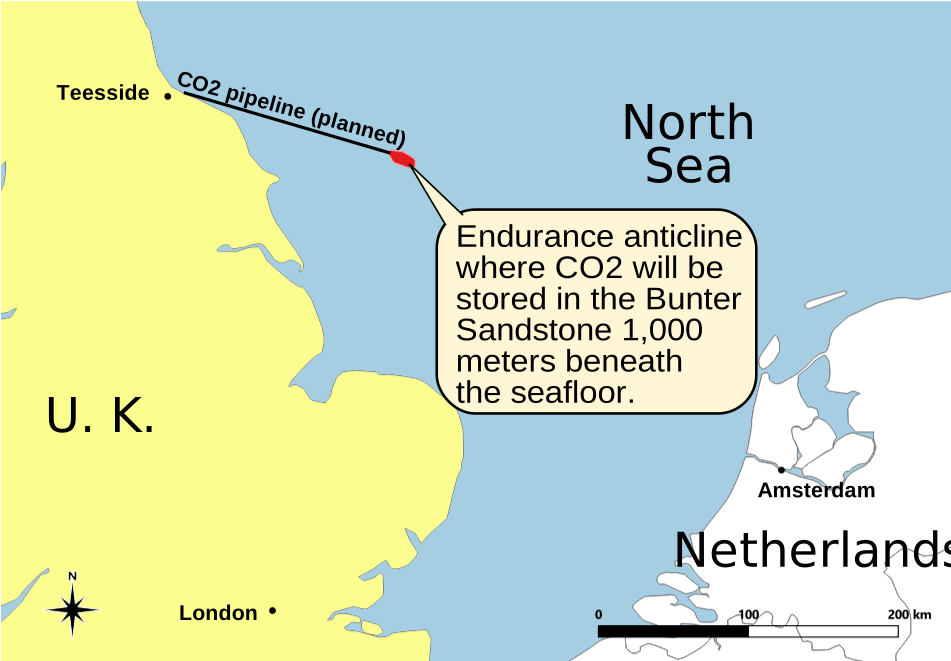
A recent computer modelling study suggests that a top-sealing rock layer may not prevent CO2 from migrating out of an underground sandstone reservoir like the one planned for the U.K.'s largest carbon capture project. The project, known as the East Coast Cluster, is in the early stages of development in an industrial region on England's northeast coast near Teesside.
The East Coast Cluster will capture about 24 million tons of CO2 per year from the exhaust streams of fossil-fueled industrial facilities, including power plants, gas processing plants, and cement plants.
Although the East Coast Cluster overall will be a carbon dioxide emissions reduction project, a planned direct air capture facility, called UnionDAC, was recently added to the project which would be classified as carbon dioxide removal.
Captured CO2 will be compressed into a dense, liquid-like state and transported by pipeline about 145 km offshore to a well on the floor of the North Sea. There it will be injected into the Bunter Sandstone Formation, a sandstone layer about 275 meters thick that lies approximately 1,000 meters beneath the seafloor.
The stack of sedimentary rock layers in the storage area was warped more than 50 million years ago into a 22km by 8km upward-oriented fold (called an "anticline"). The Bunter Sandstone in this particular anticline (named the Endurance anticline or structure) has the to store 450 million tons of CO2. Injection is scheduled to begin in 2027 and will continue for several decades.
Companies participating in the project are motivated in part by the ability to offset emissions through carbon credits generated by capturing and storing CO2. The program is part of the U.K.'s effort to achieve net-zero emissions by the year 2050.
Carbon credits generated by underground storage assume that the CO2 remains securely trapped for the long term. Storage durations of or more are generally anticipated. Achieving that goal requires an effective top seal because, like oil and natural gas, CO2 is more buoyant than surrounding groundwater. Over time CO2 tends to migrate upward through permeable rock layers until it encounters an impermeable layer, such as shale or salt, where it becomes trapped.
If CO2 were to migrate upward through the overlying rock layers and eventually escape into the atmosphere, the emissions reduction achieved by capturing it would be lost.
The primary top seal above the Bunter Sandstone is considered to be the Röt Halite, a thick layer of rock salt composed mainly of the mineral halite (NaCl, the same composition as table salt). Its sealing ability has been examined in several studies, including two recent investigations that reached different conclusions. One was conducted by scientists at the British Geological Survey, while the other was carried out by researchers at the University of Nottingham.
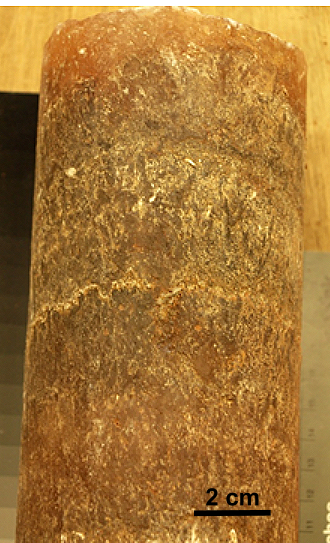
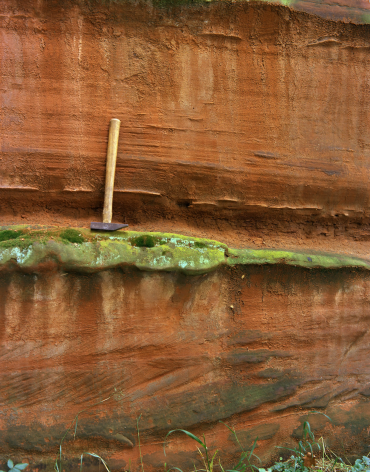
British Geological Survey study of the Röt Halite
The British Geological Survey examined the ability of the Röt Halite to act as a long-term seal for CO2 stored in the underlying Bunter Sandstone Formation, offshore from Teesside.
Using data from natural gas exploration wells in the southern North Sea, the researchers mapped the distribution of five salt layers that make up the Röt Halite. They described laboratory studies showing the extremely low permeability of pure halite and emphasized the malleable nature of rock salt at depth. Under high pressures, salt can slowly deform and heal fractures, helping maintain an effective seal over long periods.
The researchers also pointed to isolated pressure zones encountered in Bunter Sandstone gas wells as additional evidence that the overlying halite and shale have acted as effective seals.
University of Nottingham study of top seals (caprock)
In contrast, researchers at the University of Nottingham developed a three-dimensional computer model to simulate the pathways that stored CO2 could follow through the Bunter Sandstone and into overlying sealing formations. Their was published about four months before the British Geological Survey investigation.
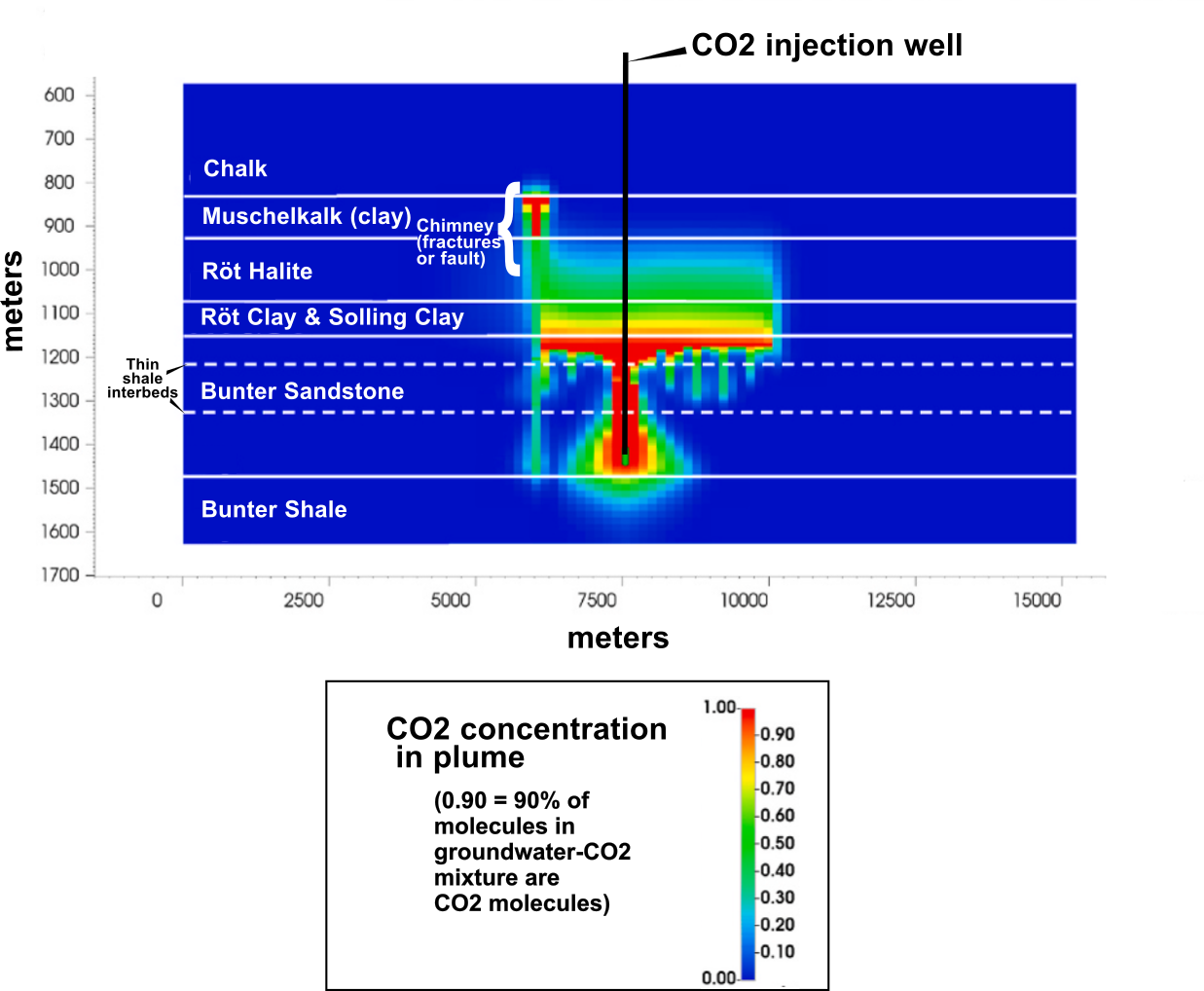
The model consisted of approximately 100,000 grid cells representing the Bunter Sandstone, Bunter Shale, and Röt Halite. Data describing hydraulic and chemical properties — including permeability, pressure, fluid viscosity, diffusion, and fracture permeability — were assigned to each cell. A fracture or fault zone, referred to as a "chimney" was included in the model. Thin layers (interbeds) of shale were also included.
The model accounted for a key difference between CO2 and natural gas. When CO2 dissolves in groundwater it forms carbonic acid (H2CO3), whereas natural gas (methane, CH4) does not. If the acid is not sufficiently buffered by calcium in the surrounding rock or groundwater, it can dissolve small amounts of calcite (CaCO3) contained within clay or shale layers, potentially affecting the integrity of the seal.
The researchers simulated CO2 migration over a period of 1,000 years, comprised of a 50-year injection period followed by a 950-year storage period. The model assumed 0.7 million tons of CO2 were injected per year, reaching a total 34 million tons over 50 years.
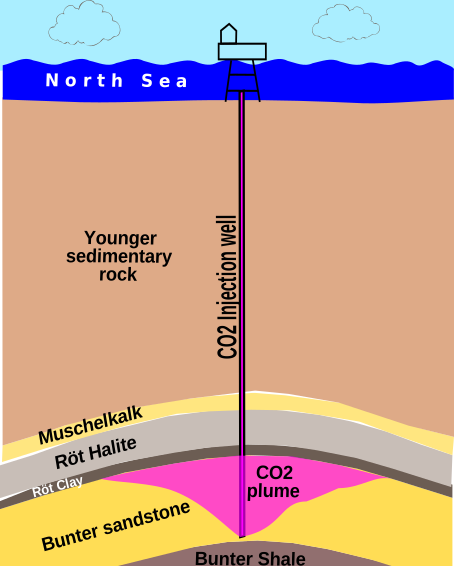
Their model predicted a broad plume of CO2 would penetrate upward through the Röt Halite and into the overlying Muschelkalk Clay, with a narrow plume of CO2 extending upward through the narrow chimney (fault or fractures) included in the model into an overlying chalk formation (see figure, below). These results contrast sharply with the British Geological Survey study, which concluded halite and mudstone (clay) layers would effectively contain the stored CO2.
What the two studies tell us
Together, the two studies highlight the difficulty of predicting the long-term behavior of CO2 stored deep underground. The outcome has important implications for the East Coast Cluster and other carbon storage projects as countries pursue net-zero emission status.
With about 77 carbon capture and storage already operating worldwide and more than 600 under development — including the East Coast Cluster — the long-term performance of underground storage reservoirs will ultimately be tested over time.