


STRATOS closing in on commercial launch
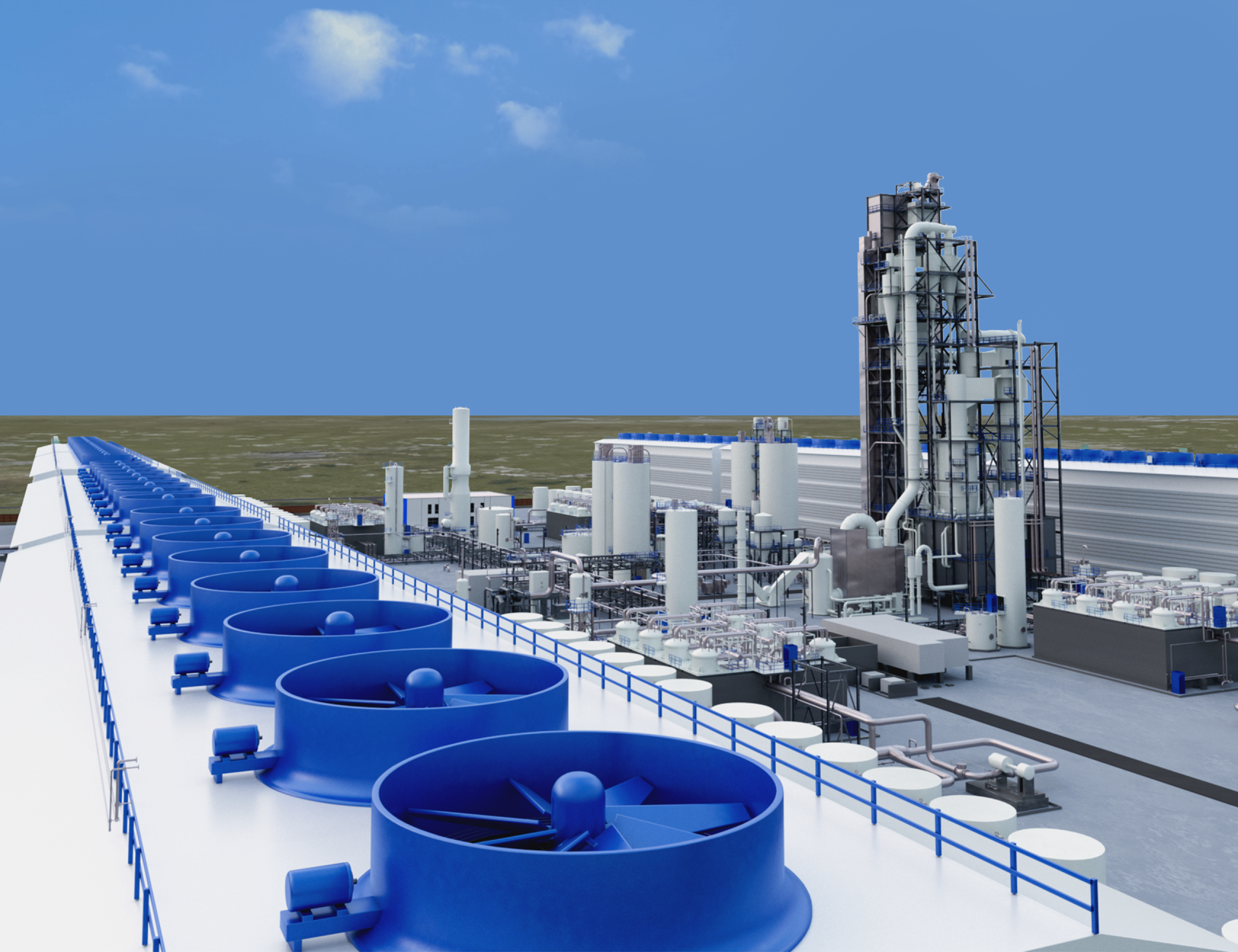
Occidental Petroleum (Oxy) said its flagship STRATOS direct air capture plant in West Texas is moving from construction into commissioning as the company works toward a commercial launch, according to details disclosed in its third-quarter 2025 earnings call.
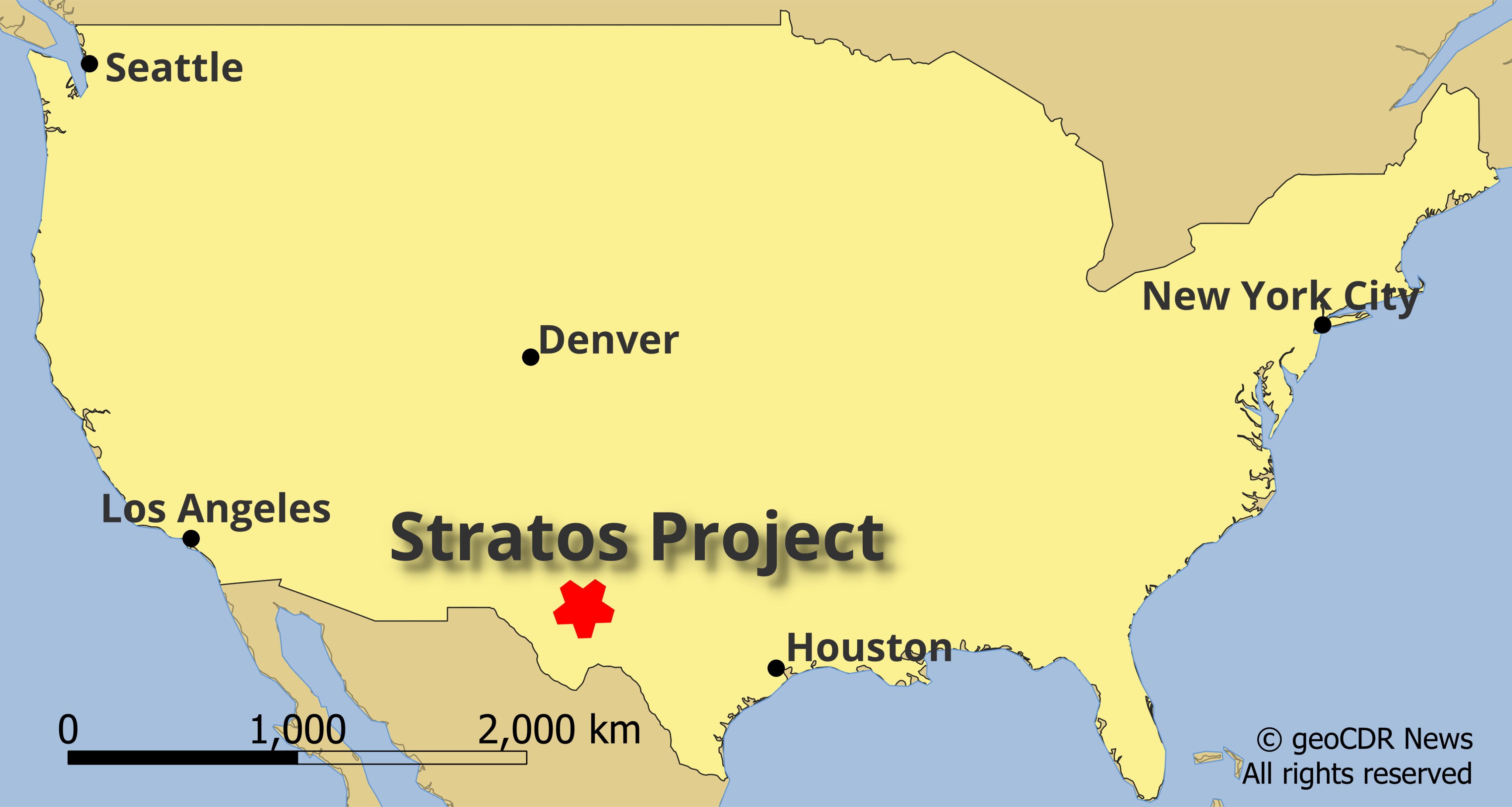
The facility is being developed by Oxy's subsidiary 1PointFive in Ector County. The plant is designed to remove about 500,000 metric tons of carbon dioxide a year once fully operational, which will position it among the world’s largest DAC projects.
Completed work
About half of the plant’s planned capacity was complete at the time of the earnings call, including the primary processing facilities and the construction and commissioning of the first two capture trains.
Wet commissioning has begun, water systems are circulating, and CO2 compression equipment has been tested at design pressure, early technical milestones that precede the start of capture operations.
Oxy said the first phase includes 30 air contactors and 52 pellet reactors, with additional modules planned as later trains are installed.
Solar electric power
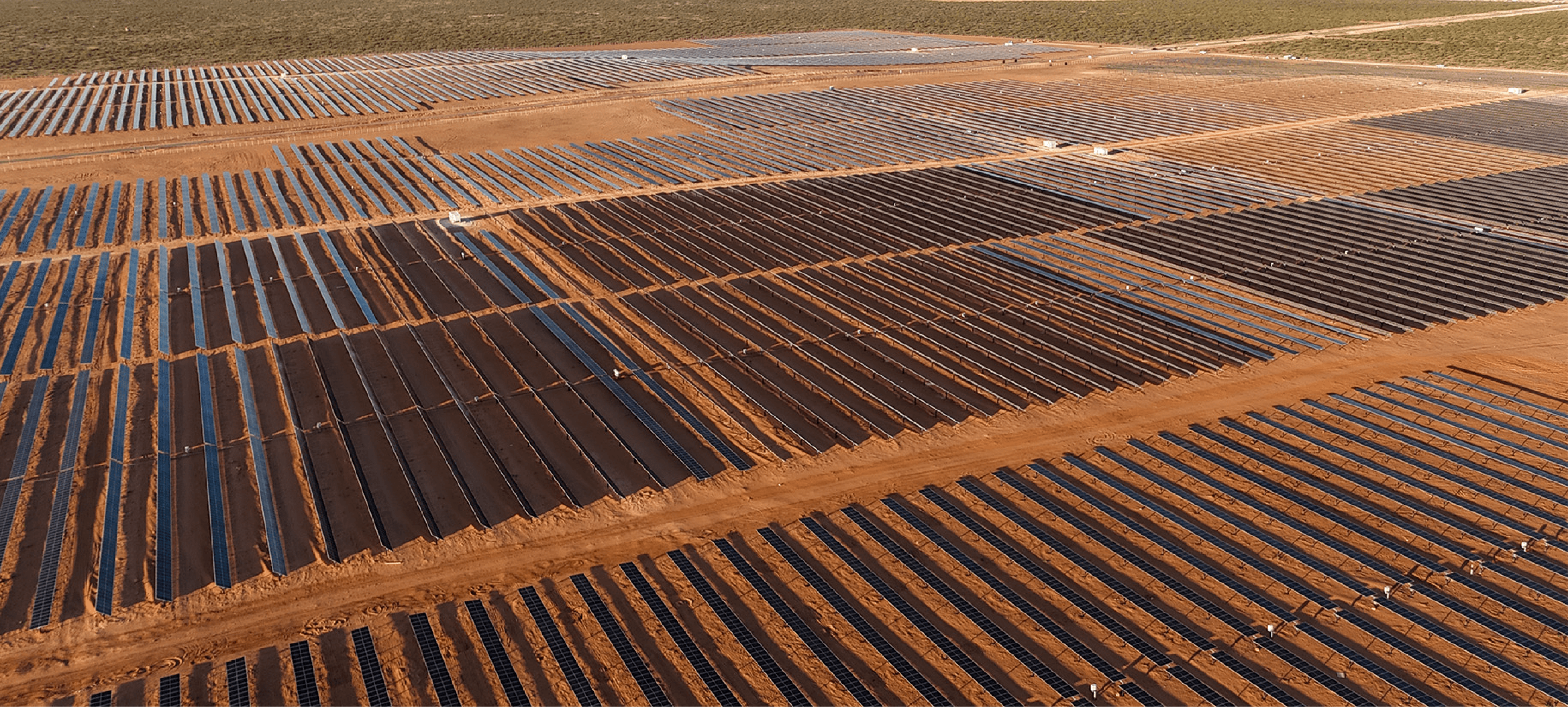
STRATOS is powered by solar electric power provided by Origis Energy's Swift Air Solar project, also located in Ector County.
Underground storage
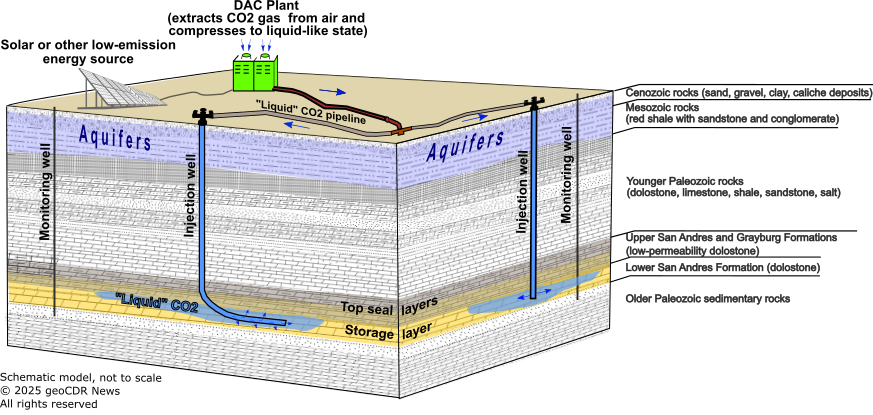
The project has also secured EPA Class VI underground injection well permits, clearing a key regulatory hurdle for permanent geologic storage of captured carbon. Captured CO2 will be pipelined about 4 km from the capture plant to the underground injection wells. The permit applications indicate CO2 will be injected into the Lower San Andres Formation, a layer of 'dolostone' that lies about 1,300 meters below the land surface. EPA approved the injection well permit applications in April 2025.
Dolostone is a common sedimentary rock composed of the mineral dolomite (MgCaCO3). Dolostone is similar to limestone (composed of the mineral calcite, CaCO3), but with a higher magnesium (Mg) content. CO2 can be stored inside tiny pore spaces in dolostone. The pore spaces are between grains in the rock such as ooids, which are a type of rounded grain deposited along the coast of a warm sea.
Horizontal and vertical CO2 injection wells at STRATOS (conceptualization by geoCDR News)
Remaining work
Work to be done (as of the Q3-2025 earning call) included adding potassium hydroxide to the capture system, advancing central processing and calciner start-up, building pellet inventory and completing Trains 3 and 4. The company said it plans to apply lessons from early commissioning as it scales the facility toward full capacity.
More details are provided in a previous geoCDR News article STRATOS, the world’s largest DACCS plant is under construction in West Texas).