

Cascade Climate expands ERW Data Quarry with new datasets across three continents

A nonprofit data initiative aimed at accelerating enhanced rock weathering (ERW) research has doubled the amount of field data available to scientists, adding new datasets from India, Brazil and Germany that span crops, climates and deployment types.
Users of the data would also include ERW developers, investors, and carbon credit buyers.
The ERW Data Quarry, an online data repository operated by Cascade Climate, now includes contributions from commercial deployments and research partnerships, bringing its total pipeline to 26 datasets and expanding coverage into regions widely viewed as critical for scaling carbon removal.
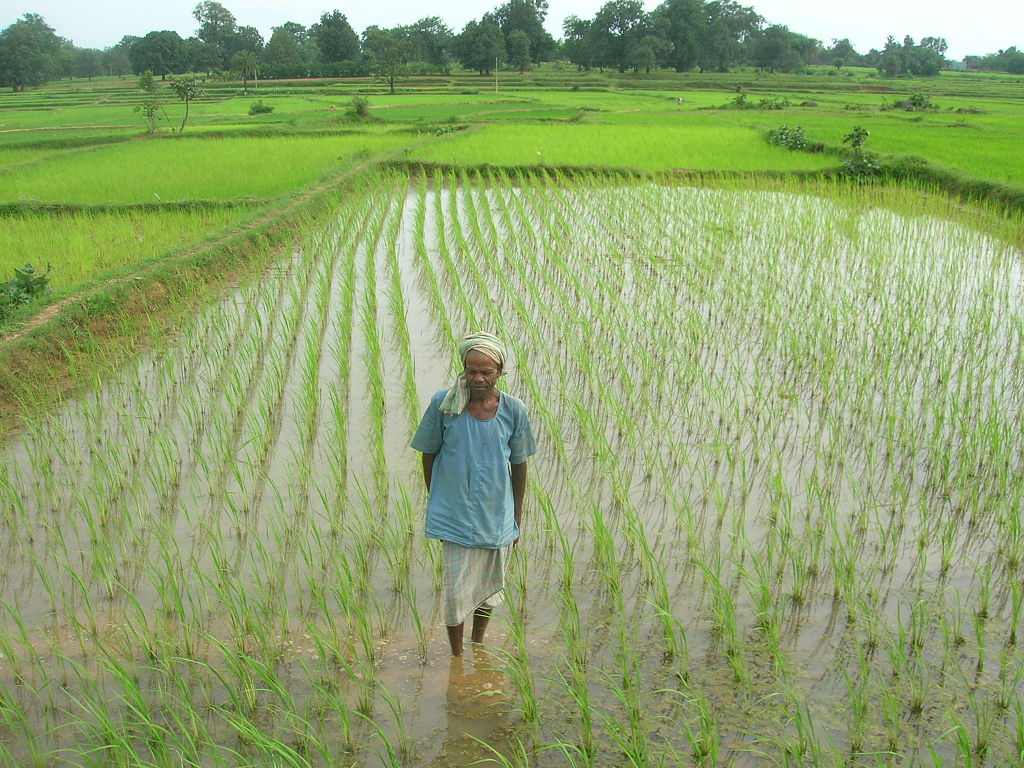
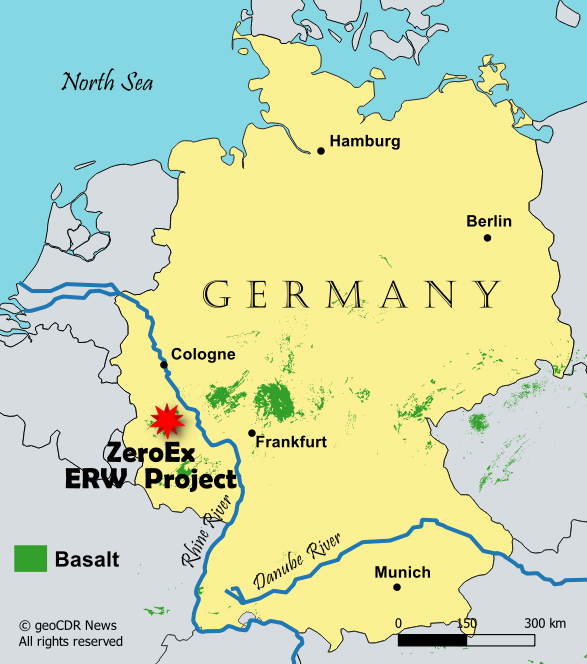
Among the new additions are data from 635 smallholder rice farms in India’s Chhattisgarh state, offering one of the first looks at ERW performance in a major global staple crop grown across more than 170 million hectares. In Brazil, data from a citrus plantation deployment extends ERW research into perennial cropping systems, while a German dataset combines field and greenhouse trials to help isolate environmental drivers of weathering rates.
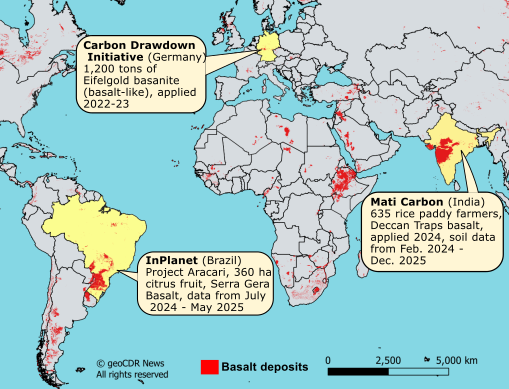
The datasets include measurements of soils, porewater chemistry and biomass, along with environmental conditions. Together, they offer a more complete picture of carbon removal rates and agronomic impacts — an area that has been a persistent bottleneck for ERW verification and crediting.
Two additional developers — Terrasols and Rock Flour Company — have also committed to sharing data from commercial projects, reinforcing a broader push toward transparency in a field where limited empirical data has slowed standard-setting and market confidence.
Cascade Climate said datasets will continue to be released on a rolling basis as projects mature, with publicly accessible health, safety and peer-reviewed datasets hosted through a dedicated ERW channel on the CDRXIV platform.
Background: Cascade Climate and its role in ERW infrastructure
Cascade Climate is a U.S.-based nonprofit organization focused on building shared infrastructure for carbon dioxide removal, particularly in enhanced rock weathering. The organization emerged in the early 2020s as part of a broader effort to address one of ERW’s core challenges: the lack of standardized, high-quality field data needed for measurement, reporting and verification (MRV).
The group is backed by philanthropic and catalytic climate funding, including support from major climate-focused foundations and advance market commitment (AMC) buyers seeking to accelerate high-quality carbon removal pathways. Its work is designed to complement — not replace — commercial developers by creating common data and research tools that benefit the entire sector.
Cascade Climate has partnerships spanning global ERW deployment regions, including North America, Latin America, Europe and South Asia.
Tools beyond the Data Quarry
While the ERW Data Quarry is its most visible initiative, Cascade Climate has developed a broader suite of tools aimed at standardizing and scaling ERW:
- ERW Field Data Partnership Grants – Funding programs that support data collection embedded within commercial deployments, helping bridge the gap between research and real-world operations.
- CDRXIV data infrastructure – A public data-sharing channel where vetted datasets, including health and safety data, can be accessed and reused by researchers and standards bodies.
- Data access and coordination tools – Systems that allow researchers to request non-commercial access to datasets, improving collaboration while maintaining developer control over proprietary information.
Together, these tools aim to reduce fragmentation in ERW research and create a common evidence base for crediting methodologies, which remain under development across voluntary and compliance markets.
Why it matters
Enhanced rock weathering has attracted growing interest as a potentially scalable, land-based carbon removal pathway, particularly in tropical agricultural regions. But its progress has been constrained by a gap between field data and unresolved questions around MRV. That gap — between field activity and usable data — has been one of ERW’s biggest constraints.
By expanding access to real-world datasets across diverse geographies and crop systems, Cascade Climate’s platform could help close those gaps—informing both scientific understanding and emerging carbon credit standards.
For a field still transitioning from pilot projects to commercial scale, the availability of shared, comparable data may prove as critical as the underlying technology itself.